"Art is not a mirror with which to reflect the world; it is a hammer with which to shape it"
Showing posts with label Christianity. Show all posts

Friday, 21 December 2007

Like A Prayer

Like A Prayer, 1989. Directed by Mary Lambert.

So classic there’s nothing much that needs to be added… so I won’t… Ha! Out-manoeuvred you again! I didn’t have house-room for Madonna until a few years back so I must have been more drawn to the promo than the song: nifty story, beautiful image making (so much so they’ve become a cliché) and a heady mix of steamy sensuality and fervent religiosity… made a major impact on my blank little mind and I loved the religious imagery. I think it was the whole image system that really caught my magpie eye. My only major quibble is the framing device that didn’t tend to get shown way back when, but it works… I guess. Mary Lambert went on to direct Pet Cemetery (sic).

It stirs a memory from somewhere of a million years ago in a different country: while on holiday I once saw one of those ‘Black Madonnas’… I can’t remember where but I’ve narrowed it down to two possibilities Saintes-Maries-de-la-Mer or Rocamadour… if the W. is to be believed it may well be the latter. But I’m just not sure. There were fields of lavender around there somewhere as well… looked and smelled wonderful.

…and now I love the song as the well as the promo.

Saturday, 1 December 2007

Götterdämmerung

“I don’t think there is anything wrong in having a religious conviction… (but) you talk about it in our system and, frankly, people do think you’re a nutter.”
-Tony Blair, The Blair Years, Episode 3

“God doesn’t exist, grow up.” “Those of us who have reached the age of reason and aren’t afraid of the dark would really like all of the god-botherers to stop bothering us, thanks. … I have had it up to here with the lot of you. Fuck off and fuck off now.”
-a recent screenwriting blogger's posting.

Now, before I get started I want to make it absolutely clear that this posting is NOT about whether a God, or Gods, actually exists or whether any particular brand of worshipping in a Theistic system may be preferable over any other. This post is about something else and will mainly consist of questions…

This post was prompted by several events that seem have occurred one on top of the other but primarily by something over at Potdoll’s Palace. I first started reading the Scribosphere (the blogs primarily devoted to screenwriting) in earnest about five months ago, and you’re all jolly nice people by the way^, and I’ve found there’s much wisdom to be found here (I wish I had something constructive to add to it- I only seem to have opinions and questions!). Shortly after this inauspicious arrival there were a number of posts from various people proclaiming their Atheism. This started me thinking about something which I then put to one side and promptly forgot all about. Then the other day at Potdoll’s someone quoted a hymn but immediately qualified it with ‘I’m not a believer’… and it got me thinking again, why the need to make this clear, people quote from Shakespeare and yet nobody qualifies it with ‘I’m not a Shakespearean’ or ‘I’m not an actor’. Why would it so necessary to clarify lack of belief? Then as if to prove a point there appeared the post from which the above quote appeared.*

My exact question on Potdoll’s post was ‘is there anybody out there prepared to admit to being a Believer?’ I didn’t even realise until it was mentioned that I’d used the word ‘admit’: not profess, proclaim, declare or even just mention, but admit as if it was something shameful- people admit crimes, they admit affairs- they admit things they think they should feel guilty about- but should Theistic belief be such a thing?

I’ve been around various branches of the Arts for longer than I care to remember and in all that time I can only recall four Christians who would openly acknowledge their Faith (one tutor and three students- one from Saint Helena, one from South Korea, one from Britain) but I did find a few who were but wouldn’t publicly acknowledge. All the Muslims and Hindus have been comfortable to profess their belief and, intriguingly, the reaction to their beliefs from others has tended to be more favourable as well- I hope it was not from some patronizing paternalistic attitude or from some notion of inherent exoticism. On the other hand, I have found a large number of proud Atheists including at least three tutors who have belittled both belief and believers, in some instants to the face of the above mentioned believers (not as part of reasoned debate but purely from scorn or ridicule).

It is certainly part of the British psyche to avoid talking too much about various things: religion, pay packet size, being good at things, being proud of things, etc. and the British do seem to cringe when they hear others discussing their Faith. So a certain reticence is understandable. The British are good at reticence! Not that I’d want to boast about it! This all raises a series of questions for me in three distinct areas…

Atheism
Why do so many screenwriters (and artists in general**) seem to have no Theistic beliefs? Why is this view so prevalent in the arts? Is it harder for we artists to acknowledge a Creator given that we ourselves create on a daily basis? Is it because writers are often highly educated and it is known that there are higher levels of Atheism concomitant with higher levels of education. (Although, it should be noted, there are also many educated people who are devout.)

Embarrassment
Are people embarrassed to admit a religious faith amidst such vocal Atheism? And is this particularly so in places like the Scribosphere? If even the (ex-) Prime Minister is embarrassed to mention his religious beliefs why would any of the rest of you Scribes find it any easier? Is it easier to admit to drug-taking than a belief system? Could it be that because the Atheists are more highly educated than the Theists that the believers are not capable of the requisite skill for constructive argument and debate and so prefer to remain silent? Could it be that people don’t mention anything because a strident belief might offend other people? For example, this week an invited guest speaker, Cristina Odone, was stopped from giving a sermon in favour of outward religious expression at a church carol service because it might offend any Atheists in the audience.

General Population
The high levels of non-belief amongst writers and artists are more intriguing given the statistics for the general British population. At the last census (2001) four-fifths of the UK profess to some sort of religious faith (of the others, 15.5% stated no religion and 7.3% refused to say: presumably this included all those Jedi Knights!); subsequent surveys in various newspapers from Left and Right seem to show a general 75-85% belief rate for Britain. Is it advantageous or disadvantageous to be out of sync. with the majority view? Does this or should this give carte blanche to the artist to offend at will those who do believe? Does this mean when writing it is harder to justify belief than disbelief? Does this lack of sympathy (or downright hostility) with believers mean that we writers find making fair representations of religious matters and people harder to achieve?***

As Potdoll suggested “maybe writing is getting more popular because less of us believe? Is it another way to 'transcend' death? Is religion more private than it used to be?”

Is it possible that the general lack of contact with death in our daily lives has made thoughts of a hereafter or a higher purpose to life less necessary? Does an absence of faith mirror a sense of betrayal with religion? Have our creative impulses become a replacement for God? Has the potential of our works to survive us become our pathway to immortality? Has our creativity become our way of working through our problems, neuroses and paranoias; our psychiatry, our confession and our salvation?

“Thank you and may your God go with you”
-Dave Allen

^Blatant sucking up, you lovely, lovely people! ;-)
*And was quite swiftly removed as well!
**The one exception would appear to be composers for some reason… Tavener, Macmillan, Glass, etc.
***Watching the last 7 years of Doctors, as I have, would give a good example of this!

Friday, 9 November 2007

Night Shift

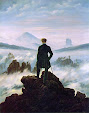
…and so the dread dates have passed, the festivals of larkness and fright, and I ascend once more to my lofty crag, there to stare mournfully into the Heavens…

Actually, I have mixed feelings about Hallowe’en. I like the idea of Hallowe’en far more than the practice. Maybe my feelings are best summed up by the statistics: five years ago Britain spent about £8 million on the festivities; last year it was £100 million. This sheer profligacy tends to irk me to a certain extent. I don’t much like the way that, like virtually everything, it’s been hijacked by the true blood-suckers, the free market capitalists. It seems to have reached the point where nothing is genuinely pure, untainted by the desire to extract the last penny. From love to death, weddings to funerals, nothing is left unexploited.

I have images in my mind of what Hallowe’en should be but the reality always fails to live up to it. I like the idea of Hallowe’en as a breach between our world and the next, a mingling of the Quick and the Dead. I see the Eastern European customs of spending the night in the cemetery commemorating the lives of the departed with food, reflection and celebration and I see a culture more in touch with something deeper. It seems strange that for all the violence in the news and on-screen death has become unmentionable and unthinkable. Personally, I’m not frightened of being dead, merely of the dying.

‘O Freunde, nicht diese Töne!’ For my part in the Hallowe’en revelry I removed the chimes from the doorbell (not that I need worry on my mountain crag… the lengthy climb usually puts off all but the most ardent trick-or-treater) and watched The Blood Spattered Bride (La Novia Ensangrentada) (1972, Vicente Aranda), which has brought my Spanish up to about ten words.

If I’d seen The Blood Spattered Bride earlier I’d have included it on the vampire film list but I hadn’t… so I didn’t. This film caught me by surprise as, while by no means a masterpiece, it was a well-above average genre entry being far more serious-minded than some of the associated lurid artwork. It was made at the same time the Hammer studios productions were starting to wind down, and two years after the studio made their own adaptation (The Vampire Lovers) of the same story, Le Fanu’s Carmilla. The two could not be more different in both execution and outlook. The Spanish production has a contemporary setting, a couple of (comparatively) shocking violent moments and a refreshing lack of obsession with the Lesbian elements (I say this not pejoratively but because other productions have dwelt on these scenes sensationally.) Many of this era’s Euro-horrors tend to portray women as grasping harpies or pathetic victims while their husbands are invariably womanizing sadists; not here, he’s actually a normal human being. And this is possibly where the film really scores, by having genuine sympathetic characters involved in the otherwise strange narrative. The most striking revelation was that the endeavour was interested in a real theme (male fears of female empowerment and female fears of aggressive male sexuality), although I couldn’t quite work out which, if either, side of the fence it chose to fall on. Though the last couple of images give a hint to the makers’ stance. There are some wilfully bizarre decisions including a woman snorkelling under the beach sand and, for no readily apparent reason, they changed Carmilla’s patronymic from Karnstein to Karstein.

I can’t help thinking there is interesting work to be done on Spanish cinema under Franco given what came out during and shortly after the regime: The Spirit Of The Beehive, Cria Cuervos, the Blind Dead series and so on. There’s also probably something to be done with the cultural differences between various different Euro-horrors of the 60’s and early 70’s. Clearly, Italian horror is different from Spanish is different from French is different from British. Of course, it’s probably all been written but I won’t let that stop me from musing.

I hope you liked my rundown of my vampiric treasures. There were a couple of titles I nearly included but didn’t; quickly here’s what and why:

The Mask Of Satan (1960, Mario Bava) a fine looking film and certainly Bava’s best. I probably should have included it!
The Fearless Vampire Killers (1967, Roman Polanski), while there are some marvellous scenes (the vampire ball and the mirrors, the Jewish vampire) for a spoof it is not nearly funny enough (especially when compared with Young Frankenstein) and it’s also quite slow and overlong.
Martin (1978, George A. Romero), perhaps, along with Season Of The Witch, Romero’s least typical film. (The Crazies is more or less Night Of The Living Dead with a different MacGuffin.)
Nosferatu, The Vampyre (1979, Werner Herzog), a fine film yet surely rendered superfluous by the original. However, the line of coffins being carried through the town has a power all its own, Isabelle Adjani is striking and the score has some great moments, the most unsettling and greatest being the choral piece borrowed for Kate Bush’s amazing Hello Earth (buy it!).
Nightwatch (2004, Timur Bekmambetov), this is a great fun film and a lot of care has been taken to fill it with novel touches- even the subtitles are interestingly done- but there seems something missing.

Then there’s the fun Razor Blade Smile (1998, Jake West); the fascinating Wisdom Of Crocodiles (1998, Po Chih Leong); the strange Australian Thirst (1979, Rod Hardy); the lovably daft Love At First Bite (1979, Stan Dragoti); Kiss Of The Vampire (1964, Don Sharp) and Queen Of The Damned (2002, Michael Rymer), which is just a guilty pleasure…

Of course, all this fangtastic vamping around (*feel free to groan*) has made my mind wander back to the vampire films I’d like to write. This is a very bad thing. I’ve thought on the one many times before and it always defeats me. It’s probably a novel rather than a film and yet the images that come to me seem so rooted in the cinema. I have vast quantities of notes, more ideas than a single film could support and yet at heart there is a giant problem… I can’t decide on the focus of the story. Do I go with the main character’s past or stick to their present? Do I risk comparisons with Blade or Interview With The Vampire? In my head it works, but on paper it would only ever be like Ives’ Universe Symphony*, a monumental conception probably never intended to be performed. It looks absolutely beautiful in my head but it doesn’t really make up for a lack of a coherent plot.

“O friends, no more of these sounds!
Let us sing more cheerful songs, more full of joy!”
-Friedrich von Schiller

*The Universe Symphony was intended to be played by three full orchestras each on top of a hill or mountain top and augmented by steeple bells. There is now a recording available but it was recorded in the same manner as Stockhausen’s Grüppen. Grüppen was supposedly ground-breaking with its three orchestra line-up but was predated by Ives’ nigh-on unperformable work by some 30-40 years.