"Art is not a mirror with which to reflect the world; it is a hammer with which to shape it"
Showing posts with label Halloween. Show all posts

Friday, 9 November 2007

Night Shift

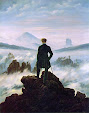
…and so the dread dates have passed, the festivals of larkness and fright, and I ascend once more to my lofty crag, there to stare mournfully into the Heavens…

Actually, I have mixed feelings about Hallowe’en. I like the idea of Hallowe’en far more than the practice. Maybe my feelings are best summed up by the statistics: five years ago Britain spent about £8 million on the festivities; last year it was £100 million. This sheer profligacy tends to irk me to a certain extent. I don’t much like the way that, like virtually everything, it’s been hijacked by the true blood-suckers, the free market capitalists. It seems to have reached the point where nothing is genuinely pure, untainted by the desire to extract the last penny. From love to death, weddings to funerals, nothing is left unexploited.

I have images in my mind of what Hallowe’en should be but the reality always fails to live up to it. I like the idea of Hallowe’en as a breach between our world and the next, a mingling of the Quick and the Dead. I see the Eastern European customs of spending the night in the cemetery commemorating the lives of the departed with food, reflection and celebration and I see a culture more in touch with something deeper. It seems strange that for all the violence in the news and on-screen death has become unmentionable and unthinkable. Personally, I’m not frightened of being dead, merely of the dying.

‘O Freunde, nicht diese Töne!’ For my part in the Hallowe’en revelry I removed the chimes from the doorbell (not that I need worry on my mountain crag… the lengthy climb usually puts off all but the most ardent trick-or-treater) and watched The Blood Spattered Bride (La Novia Ensangrentada) (1972, Vicente Aranda), which has brought my Spanish up to about ten words.

If I’d seen The Blood Spattered Bride earlier I’d have included it on the vampire film list but I hadn’t… so I didn’t. This film caught me by surprise as, while by no means a masterpiece, it was a well-above average genre entry being far more serious-minded than some of the associated lurid artwork. It was made at the same time the Hammer studios productions were starting to wind down, and two years after the studio made their own adaptation (The Vampire Lovers) of the same story, Le Fanu’s Carmilla. The two could not be more different in both execution and outlook. The Spanish production has a contemporary setting, a couple of (comparatively) shocking violent moments and a refreshing lack of obsession with the Lesbian elements (I say this not pejoratively but because other productions have dwelt on these scenes sensationally.) Many of this era’s Euro-horrors tend to portray women as grasping harpies or pathetic victims while their husbands are invariably womanizing sadists; not here, he’s actually a normal human being. And this is possibly where the film really scores, by having genuine sympathetic characters involved in the otherwise strange narrative. The most striking revelation was that the endeavour was interested in a real theme (male fears of female empowerment and female fears of aggressive male sexuality), although I couldn’t quite work out which, if either, side of the fence it chose to fall on. Though the last couple of images give a hint to the makers’ stance. There are some wilfully bizarre decisions including a woman snorkelling under the beach sand and, for no readily apparent reason, they changed Carmilla’s patronymic from Karnstein to Karstein.

I can’t help thinking there is interesting work to be done on Spanish cinema under Franco given what came out during and shortly after the regime: The Spirit Of The Beehive, Cria Cuervos, the Blind Dead series and so on. There’s also probably something to be done with the cultural differences between various different Euro-horrors of the 60’s and early 70’s. Clearly, Italian horror is different from Spanish is different from French is different from British. Of course, it’s probably all been written but I won’t let that stop me from musing.

I hope you liked my rundown of my vampiric treasures. There were a couple of titles I nearly included but didn’t; quickly here’s what and why:

The Mask Of Satan (1960, Mario Bava) a fine looking film and certainly Bava’s best. I probably should have included it!
The Fearless Vampire Killers (1967, Roman Polanski), while there are some marvellous scenes (the vampire ball and the mirrors, the Jewish vampire) for a spoof it is not nearly funny enough (especially when compared with Young Frankenstein) and it’s also quite slow and overlong.
Martin (1978, George A. Romero), perhaps, along with Season Of The Witch, Romero’s least typical film. (The Crazies is more or less Night Of The Living Dead with a different MacGuffin.)
Nosferatu, The Vampyre (1979, Werner Herzog), a fine film yet surely rendered superfluous by the original. However, the line of coffins being carried through the town has a power all its own, Isabelle Adjani is striking and the score has some great moments, the most unsettling and greatest being the choral piece borrowed for Kate Bush’s amazing Hello Earth (buy it!).
Nightwatch (2004, Timur Bekmambetov), this is a great fun film and a lot of care has been taken to fill it with novel touches- even the subtitles are interestingly done- but there seems something missing.

Then there’s the fun Razor Blade Smile (1998, Jake West); the fascinating Wisdom Of Crocodiles (1998, Po Chih Leong); the strange Australian Thirst (1979, Rod Hardy); the lovably daft Love At First Bite (1979, Stan Dragoti); Kiss Of The Vampire (1964, Don Sharp) and Queen Of The Damned (2002, Michael Rymer), which is just a guilty pleasure…

Of course, all this fangtastic vamping around (*feel free to groan*) has made my mind wander back to the vampire films I’d like to write. This is a very bad thing. I’ve thought on the one many times before and it always defeats me. It’s probably a novel rather than a film and yet the images that come to me seem so rooted in the cinema. I have vast quantities of notes, more ideas than a single film could support and yet at heart there is a giant problem… I can’t decide on the focus of the story. Do I go with the main character’s past or stick to their present? Do I risk comparisons with Blade or Interview With The Vampire? In my head it works, but on paper it would only ever be like Ives’ Universe Symphony*, a monumental conception probably never intended to be performed. It looks absolutely beautiful in my head but it doesn’t really make up for a lack of a coherent plot.

“O friends, no more of these sounds!
Let us sing more cheerful songs, more full of joy!”
-Friedrich von Schiller

*The Universe Symphony was intended to be played by three full orchestras each on top of a hill or mountain top and augmented by steeple bells. There is now a recording available but it was recorded in the same manner as Stockhausen’s Grüppen. Grüppen was supposedly ground-breaking with its three orchestra line-up but was predated by Ives’ nigh-on unperformable work by some 30-40 years.

Wednesday, 31 October 2007

Bela Lugosi's Dead


So, it’s another Hallowe’en; the one night in the year when the shackles can be shaken off and children can use threats of violence to get free stuff and adults can use somewhat ‘unusual’ ingredients in confectionary. In honour of this auspicious date I thought I’d share, and praise, some of my favourite vampire films. Some lauded, some derided; some good, some… not so good.

Nosferatu (1922, F.W. Murnau)
The father of a race of monsters, to purloin a phrase. Although there are references to a Roumanian film named Drakula from a year earlier this ‘lost’ film is apparently a biopic of the original Vlad. So Nosferatu is arguably the first vampire film. Illegally produced, we’re lucky to have this expressionist masterpiece. Refulgent with evil, disease and decay, 85 years old and still magisterially above all that came after. One tomb rose larger and more lordly than the rest and on it but one word, Nosferatu.


Vampyr (1931, Carl T. Dreyer)
Dreyer is now mainly praised for his later (and earlier) weightier films and Vampyr would appear to be an oddity in his canon. It is a genuinely odd experience. It’s supposedly a ‘talkie’ but the dialogue is so sparse as to make that a misnomer. I would argue it is the final European Expressionist horror, at the border with the American Universal horrors. It’s almost plotless, dreamy, almost hypnotic. The hero’s waking interment is perhaps the most notable moment. The curious pervasive bleached out effect was caused by the brief and deliberate opening of the film cans to the light after shooting.


Dracula (1931, George Melford)
Forget poor old Bela a while and track down a copy of this. During the silent era films could be exported round the world with only the inter-titles needing to be changed but as sound came the studios were posed a problem of exportability. The answer initially for companies like Universal was to make their films again in Spanish for the South American market. These versions were filmed using the same sets and often the same storyboards but they had one startling difference: they were exempted the strictures of the Hays Code. While Browning’s version is ponderously directed, restrained, rather slow and bound to the stage version and therefore stagy, this Spanish language version has a more spooky atmosphere, better acting, a looser feel (it’s half an hour longer), an eroticism entirely absent from the Lugosi version, heaving bosoms and an expanded climax (Lugosi’s demise is entirely off-screen and denies the audience resolution). The minor flaw is that this Dracula is only marginally better acted than Lugosi’s.


The Isle Of The Dead (1944, Mark Robson)
This is praised here. I suspect this is the best vampire film from the 40’s. By the time Lewton came along Universal were reaching the bottom of the barrel, packaging and repackaging their classic creatures in increasingly desperate ways. This was something else, something different, and it had Karloff.

Dracula (a.k.a. Horror Of Dracula) (1958, Terence Fisher)
One of the big ones and an obvious choice. Never mind that about the only thing it kept from the novel was the title, this is a good film of the old man. It’s well cast, well made, makes good use of this new-fangled colour thing and Christopher Lee surely makes one of the most imposing presences as Dracula. 1966’s Dracula, Prince Of Darkness is maybe, marginally, the better film with it’s widescreen and bolder conception but this has a much better ending… which harks back to the original Nosferatu.

The Hunger (1983, Tony Scott)
Alright, it’s more flash than real substance but is that a major problem? This has several of the same themes as brother Ridley’s contemporaneous Blade Runner: mortality, passage of time and memory, etc. This also seems to prefigure Anne Rice’s Queen Of The Damned. On top of this there’s the luminous Catherine Deneuve and a great piece of Schubert. Recent pictures of Deneuve would seem to indicate that she’s as ageless and timeless as her character here.

Hellraiser (1987, Clive Barker)
Hellraiser? A vampire film? The bad guy’s a dead man revivified with blood who then gains strength through drinking blood from the necks of his victim. This is one of the few modern horrors to actually take itself and the genre seriously: cinematic, intelligent and generally well-acted. The score is a marvellous work in itself. All of this is carried over into the sequel, which has better acting by the presence of Kenneth Cranham. Personally, I think there are unconscious references to Dracula, Prince Of Darkness even though Barker asserts that he doesn’t much care for the Hammer Draculas.


Near Dark (1987, Kathryn Bigelow)
Vampirism brought kicking and screaming into the modern age in a way that Dracula A.D. 1972 could only have dreamed about. This has a genuinely grimy edge of society outcast feel that is impossible when the bloodsucker is in a tuxedo. These are vampires that exude a sense of threat reinforced by the fact that it could be the guy next to you in the bus station.

Nightlife (1989, Daniel Taplitz)
A strange sad comedy-horror. It’s set in Mexico City which lends a new angle to the proceedings. The story is a love triangle: evil vampire and young doctor in love with the same vampiric Maryam d’Abo. Strangely, it’s quite melancholy for an ostensibly light comedy.

Sundown, The Vampire In Retreat (1990, Anthony Hickox)
Vampire comedy with everything thrown into the mix from mad scientists to cowboys. This is great fun. I initially watched this trepidation expecting something stupid but passable… then all of a sudden it’s excellent, smart, scary and funny. And it’s full of people that make you say ‘that’s what’s-his-name… you know…’


Tale Of A Vampire (1992, Shimako Sato)
An unfairly maligned, deeply flawed film. Deeply romantic, deeply melancholy. Virtually a three-hander from Kenneth Cranham, Julian Sands and Suzanna Hamilton. It’s a little slow, a little dreamy and very good-looking. It’s not a perfect film by a long distance but it has a certain something; a spot of imagination that is lacking in many films with many times the budget. And what happened to director? He apparently returned to Japan to continue making films.

Nadja (1994, Michael Almereyda)
A playful yet serious film, seemingly a deliberate return to the atmosphere of Vampyr with a plot liberated from Lambert Hillyer’s 1936 Dracula’s Daughter. This is from the days of American Indie cinema when there was genuine variety. Quirkily cast with memorable turns from Elina Löwensohn in a role she seems to have been destined to play as Dracula’s Daughter and Peter Fonda as a Van Helsing only eclipsed in eccentricity by Hopkins for Coppola. The chiaroscuro photography is radiant with a nifty trick of becoming ‘pixelvision’ for the vampire’s p.o.v. as filmed with a toy camera.


Interview With The Vampire (1994, Neil Jordan)
A fine version of Anne Rice’s only genuinely readable ‘Chronicle’. The tale of a strange and dysfunctional vampire family this film shouldn’t work: while the costumes and design are as sumptuous as would be expected and the direction is great, it does have Tom Cruise, a story told entirely in flashback narrated by a main character who’s clearly still ‘alive’ and a strangely enervated performance from Pitt. Strangely all the script drafts pre-release solely have Jordan’s name as writer by the time the film was released the sole writer was Rice. There seem to be few differences between the early scripts and the film. Quite odd.

Blade (1998, Stephen Norrington)
Portentous and groaning under the weight of it’s own seriousness it’s still a thoroughly enjoyable and very stylish action-horror-thriller. Del Toro’s sequel is interesting; Goyer’s isn’t.

Dracula- Pages From A Virgin’s Diary (2003, Guy Maddin)
Dracula the ballet. This is a wonderful dreamlike, mist-enshrouded film. Maddin is clearly indebted to expressionism and the black and white is only broken by the addition of vivid blood red. The music’s Mahler. That should have been enough to get it on the list.


Shadow Of The Vampire (2000, Elias Merhige)
How can you not love a film that has the central conceit that Murnau’s Nosferatu wasn’t fiction? This is more than just an interesting concept: this is a film about film. This is about the artist, about what or who they are prepared to sacrifice for the sake of their vision. Dafoe’s performance as Nosferatu is superb as is the make-up that renders him nigh-on unrecognizable. And that brings us neatly back to where we came in. Aren’t the cycles of life wonderful?

And that’s that. So, have a happy Hallowe’en and, should you observe such things, a contemplative, commemorative and comforting All Saints’ and All Souls’ Days. And the sun arose once more, shining its light and life across the land...